Shared Grocery Expenses: Fair Splitting Methods
A practical guide to splitting shared grocery expenses with roommates, including equal splits, itemized methods, staple rules, grocery pools, and low-drama house rules that actually hold up.
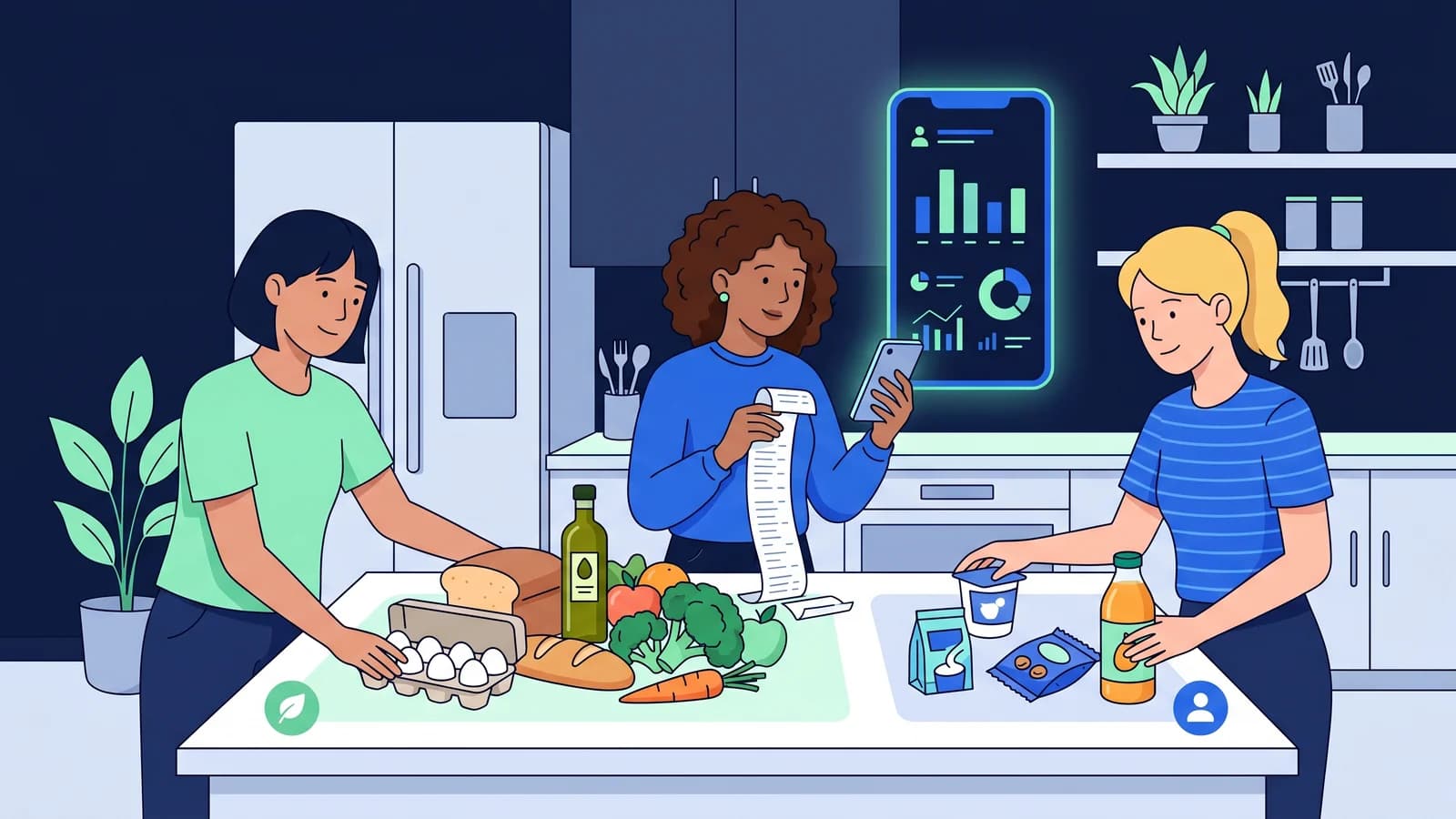
Quick Answer
What is the fairest way to split shared grocery expenses?
The fairest grocery system is usually a hybrid one: split true shared staples together, keep personal items separate, and itemize mixed supermarket runs instead of forcing everything into a flat equal split. Equal sharing works only when diets, appetites, and shopping habits are genuinely similar.
Why grocery money gets awkward faster than other bills
Groceries look simple until you live with other people. Everyone eats, so the bill feels shared. But grocery use is usually uneven in ways rent and internet are not. One roommate meal-preps. One buys premium snacks. One lives on eggs and toast. Another is suddenly on a high-protein kick that seems to cost half the supermarket. If you want the broader roommate framework first, start with How to Split Expenses with Roommates: Every Method Explained. This article zooms in on the category that creates the most tiny resentments.
The mistake most households make is treating groceries like a fixed household bill. They are not. Grocery costs swing with appetite, schedule, diet, cooking skill, and how much people actually like eating at home. That is why the right method is not the one that sounds most generous. It is the one your flat can follow on a tired Wednesday night without starting a courtroom scene in the kitchen.
The five grocery-splitting methods that actually work
| Method | Best for | Main upside | Main risk |
|---|---|---|---|
| Equal split | Very similar households | Fast and low admin | Falls apart when usage differs |
| Staples shared, personal separate | Most roommate flats | Clear boundaries | Needs an agreed staples list |
| Itemized split | Mixed diets and mixed baskets | High fairness | More logging |
| Weekly grocery pool | Shared dinners and regular shopping | Predictable cash flow | Can hide overspending |
| Rotating shopper system | Low-stakes basics | Shares the effort | People lose track of who covered what |
You do not need one rule for every item in the trolley. In fact, that is usually the problem. The best setup often uses one rule for shared basics, another for personal food, and itemized splits for the messy middle. Grocery fairness is less about ideology and more about matching the rule to the purchase.
1. Equal split
Equal split means you total the grocery shop and divide it evenly. For three roommates and a $150 bill, that is $50 each. This works when the household eats roughly the same kinds of food, cooks at similar frequency, and does not have big price differences between people. If everyone uses the milk, shares dinners, and raids the same fruit bowl, equal split can be perfectly sensible.
Where it fails is predictable. If one person buys salmon, protein yogurt, and fancy coffee while someone else mostly wants rice, bananas, and pasta, equal split starts feeling unfair very quickly. That is the same pattern described in Equal Splitting: When 50/50 Works (and When It Fails). Equal sharing is fine when the differences are small. It becomes nonsense when one person is quietly subsidising another person's habits.
- Use equal split only if the household shops and eats in broadly similar ways.
- Review it after two or three weeks instead of assuming everyone is fine.
- Do not use it for premium items that only one person really wants.
2. Shared staples, personal extras
This is the method I would recommend for most flats. You agree on a short list of shared staples, then keep personal items personal. Shared staples might include cooking oil, rice, flour, salt, dish soap, rubbish bags, toilet paper, and maybe milk or eggs if everyone genuinely uses them. Personal items stay out of the group split: protein powder, expensive snacks, almond milk, meal-prep containers, and the weirdly specific hot sauce somebody is emotionally attached to.
Example: three roommates do a $132 shop. Shared staples total $54, so each person owes $18 for that part. The remaining $78 is personal food and gets assigned only to the people who bought it. This system works because it respects the difference between household running costs and individual eating habits.
3. Itemized split
Itemized splitting is the cleanest answer for mixed grocery baskets. You log the full supermarket run, then assign each item to the people who actually used it. That means shared pasta sauce can be split three ways, Greek yogurt can be assigned to one person, and toilet paper can be split equally without forcing the whole trolley into one blunt rule. If you want the mechanics, Itemized Splitting: A Step-by-Step Guide covers the method in more detail.
This is where an app helps because no one wants to reconstruct a long receipt from memory. OweMeter can handle shared groups, equal splits, itemized splitting, tags, receipt photo uploads, reminders, and settle-ups. That matters because the best grocery system is not the cleverest one. It is the one your flat will still use after the novelty wears off.
- Best for households with different diets or very different appetites.
- Best for mixed supermarket runs that include both shared and personal items.
- Less necessary if nearly every item in the cart is genuinely communal.
4. Weekly grocery pool
A grocery pool means everyone contributes a fixed amount each week and the shared food comes out of that pot. For example, three roommates each put in $40, creating a $120 weekly pool for dinners, staples, and common basics. This works well when the household eats together often and wants predictable cash flow more than perfect precision.
The risk is obvious too. Pools get messy when the group has no guardrails. One person sees the pot as an invitation to buy premium ingredients. Another treats it like emergency lunch funding. If you use a pool, set rules: what categories it covers, how overspend is handled, and what stays personal. Without that, a pool becomes a polite way to delay the same old argument.
5. Rotating shopper system
Rotation means one person buys the basics this week, another does it next week, and so on. It can work for low-drama categories like fruit for the kitchen, bread, or cleaning supplies. It is less reliable for full grocery shops because memory gets fuzzy and the costs are rarely symmetrical. One week is a $38 top-up. The next is a $117 restock. Now everybody is doing mental math instead of enjoying their dinner.
If you use rotation at all, keep it narrow. Use it for obvious household basics, not for the entire food budget. And still log it somewhere. The minute your system depends on everyone remembering who covered the last two detergent runs, you are already in trouble.
House rules that prevent grocery drama
- Keep a written staples list. If it is shared, name it.
- Set shelf or cupboard rules so personal food is obvious.
- Agree what happens with leftovers from shared meals.
- Decide whether guests or partners can eat shared groceries, and when that stops being casual.
- Log mixed supermarket runs the same day, not next week when nobody remembers.
- Set a review cadence, weekly or fortnightly, so small imbalances do not grow teeth.
- Treat household basics like dish soap and toilet paper as shared unless your flat has a truly unusual setup.
- If someone is home much more than the others, talk about grocery use early instead of stewing over it.
Most grocery conflict is not really about maths. It is about ambiguity. One person thinks eggs are communal. Another thinks they are personal. One roommate assumes shared dinners are covered by the next shop. Another thinks dinner costs should be logged separately. Clear rules save more friendships than perfect calculations ever will.
Edge cases that deserve their own rule
Dietary differences are the big one. If one roommate is gluten-free, vegan, high-protein, or otherwise buying a meaningfully pricier basket, that extra cost should usually stay personal unless the household explicitly agrees otherwise. Bulk buying is another classic edge case. If someone buys a massive pack of rice, meat, or cleaning supplies because it is cheaper, either the others reimburse their share or the item stays owned by the buyer. Do not let 'I bought in bulk for the house' turn into untracked silent debt.
Then there is the guest problem. A partner occasionally eating some pasta is normal life. A partner regularly joining shared dinners, using breakfast food, and treating the fridge like their annex is a cost issue. Handle it early and calmly. The same principle shows up in How to Split Utilities with Roommates: normal variation is fine, but repeat occupancy changes deserve a real rule.
A worked example for three roommates
| Item | Cost | Split |
|---|---|---|
| Rice, oil, onions, dish soap, toilet paper | $48 | Shared three ways = $16 each |
| Chicken and yogurt for Alex | $24 | Alex only |
| Oat milk and berries for Priya | $19 | Priya only |
| Pasta, canned tomatoes, cheese for shared dinner | $27 | Shared three ways = $9 each |
| Protein bars for Sam | $12 | Sam only |
In that $130 shop, Alex owes $49, Priya owes $44, and Sam owes $37. That is more admin than a flat $43.33 split, but it is also a lot fairer. Nobody is paying for someone else's premium snacks, and the communal basics are still handled together. That is the sweet spot.
How often should roommates settle grocery balances?
Weekly or fortnightly is usually best for groceries. Monthly can work, but only if the flat is disciplined and the balances stay visible. Grocery debt grows faster than people expect because the purchases are frequent and easy to forget. If your flat already struggles with repeated small obligations, How to Split Recurring Bills Fairly is worth reading next, because the same lesson applies: regular money needs a regular rhythm.
Where OweMeter helps without overcomplicating things
OweMeter helps after the household agrees on the rules. You can keep everyone in one shared group, log supermarket runs, split staples equally, assign personal items with itemized splits, tag expenses so groceries do not blur into utilities, upload receipt photos for reference, send reminders, and settle up without dragging the same conversation through the chat every week. That is the honest use case. It does not replace the house rules. It makes the agreed system easier to follow.
If you are still comparing tools, Best Expense Tracking Apps for Roommates in 2026 is a useful shortlist. But the app is still the second step. The first step is deciding what counts as shared food in your house and what does not.
Related articles
- How to Split Expenses with Roommates: Every Method Explained
- How to Split Rent Fairly: 5 Methods
- How to Split Utilities with Roommates
- Itemized Splitting: A Step-by-Step Guide
- 5 Bill Splitting Methods Compared: Which One Is Right for You?
FAQ
If you want the short version, here it is: do not force every grocery item into a neat equal split. Share the obvious basics, keep personal food personal, itemize the messy shops, and settle often enough that nobody starts keeping score in their head. Grocery peace is not about a perfect formula. It is about a system your flat will still respect next month.
Set Up Your Flat
Track shared groceries, itemized supermarket runs, reminders, and settle-ups in one clear place.
Frequently Asked Questions
Should roommates split groceries equally?
Only if the household eats in broadly similar ways and the grocery baskets are not wildly different in price. If diets, appetites, or preferences differ a lot, a hybrid or itemized method is usually fairer.
What groceries should count as shared?
Usually the safest shared list is short: cooking oil, rice, salt, basic spices, dish soap, rubbish bags, toilet paper, and clearly communal meal ingredients. Premium personal food should usually stay personal.
How do you handle special diet items in a shared flat?
Keep them personal unless everyone agrees to share the extra cost. Gluten-free, vegan, allergy-friendly, or sports-nutrition items often cost more, so forcing those into an equal split tends to create resentment.
How often should grocery balances be settled?
Weekly or fortnightly works best for most flats because grocery spending is frequent and easy to forget. Regular small settle-ups are easier than one large monthly surprise.
What is the easiest way to track mixed grocery shops?
Log the full receipt right away, mark the shared staples, assign personal items individually, and keep one place where everyone can see the running balance. The easier the process is, the more likely your flat will actually use it.
Pillar Guide
This article belongs to the How to Split Expenses with Roommates: Every Method Explained cluster.
Related Articles

April 22, 2026
How to Split Utilities with Roommates
A practical guide to splitting electricity, gas, water, internet, trash, and shared utility bills with roommates, including fair rules for guests, work-from-home, seasonal spikes, and mid-month move-ins.

April 18, 2026
How to Split Rent Fairly: 5 Methods
A practical guide to splitting rent fairly with roommates using five methods, with worked examples, tradeoffs, and clear advice on choosing the least painful rule.

April 15, 2026
How to Split Expenses with Roommates: Every Method Explained
A practical guide to splitting rent, utilities, groceries, and shared bills with roommates, with clear methods, tradeoffs, examples, and low-drama house rules.